Is Your Investment Strategy Outdated?
The investment strategies you used to build your wealth can turn against you in retirement. A significant market drop early in retirement can dramatically reduce your portfolio’s ability to generate income.
What’s more valuable; Tiger Woods’s clubs, or his swing? What’s more important; The investments you use, or the process you choose?
Purposed Based Investing
Within the RetireRight™ process, we use a bucket-style approach. Money is invested in a variety of strategies based on when those dollars will be needed for income.
Now Bucket
(0-2 years)
Safety: Mainly uses cash and short term instruments to protect the money you will soon need to spend.
Soon Bucket
(3-5 years)
Stability: Typically short term maturity instruments that may have a guaranteed interest rate or indexed options. On-deck and ready to refill the Now Bucket.
Later Bucket
(6–10 years)
Growth: More equity oriented with various degrees of risk. Hedging strategies are often used to smooth out the ride and shorten recovery times.
Even Later Bucket
(11+ years)
Maximum Growth: Time is on your side. Higher volatility with manageable recovery time
Investment Options
Every financial advisors has the same investments to work with. Why do some find success and even more find failure? You deserve more than working with an advisor who:
- Focuses primarily on investments, returns and projections estimating how long assets will last.
- Spends more effort chasing their next client than providing true value to their existing clients, beyond just investment returns.
- Typically doesn't use a structured, collaborative process involving the client and other members of a financial team before making investment recommendations.
- Use generic questionnaires to decide which pre-built portfolio model to invest your life savings in.

Custom portfolio allocations may include:
Equity / Ownership
Stocks (individual companies)
ETFs and index funds
Mutual funds
Private Equity
Venture capital / angel investing
REITs (real estate investment trusts)
Fixed Income / Debt
Government bonds (T-bills, T-notes, T-bonds, municipal bonds)
Corporate bonds
CDs (certificates of deposit)
Money market funds
Treasury Inflation-Protected Securities (TIPS)
High-yield / junk bonds
Real Assets
Residential real estate (rental properties, house flipping)
Commercial real estate
Raw land
Commodities (gold, silver, oil, agricultural goods)
Timberland / farmland
Infrastructure
Alternative Investments
Hedge funds
Cryptocurrency / digital assets
NFTs
Collectibles (art, wine, watches, cars, sports cards)
Precious metals (physical)
Litigation finance
Business / Private
Small business ownership
Franchise ownership
Peer-to-peer lending
Revenue-based financing
Insurance-Based
Annuities
Whole/universal life insurance (cash value)
Derivatives / Structured Products
Options and futures
Structured notes
Warrants
Forex (currency trading)
Cash Equilivants
High-yield savings accounts
Money market accounts
Treasury bills
Asset Location
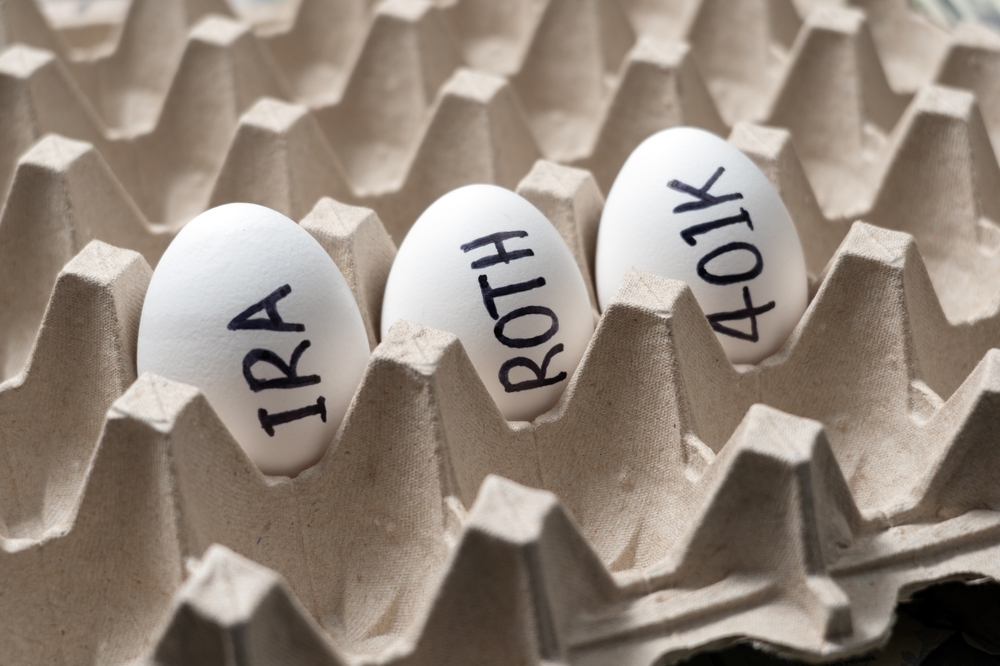
The right investments, in the right location, at the right time.
Tax-Free
What “tax-free” means: You contribute after-tax dollars, no deduction today. But your money grows completely tax-free, and qualified withdrawals in retirement are 100% tax-free, including all the growth. There are no RMDs on Roth IRAs during your lifetime, giving you full control over when (or whether) to withdraw. This is the most powerful bucket for long-term compounding because the government never touches the growth again. The trade-off is you pay tax now, making this most valuable when you expect to be in a higher tax bracket in the future.
Roth Retirement Accounts
• Roth IRA: The gold standard tax-free account. After-tax contributions; tax-free growth and withdrawals. No RMDs. 2024 limit: $7,000 (+$1,000 catch-up). Income limits apply for direct contributions.
• Roth 401(k): Roth version inside an employer plan. No income limits; same contribution limits as Traditional 401(k). Employer matches, however, go into a pre-tax account.
• Roth 403(b): Roth version for nonprofit/school employees. Same rules as Roth 401(k).
• Roth 457(b): Roth version for government and some nonprofit employees. No early withdrawal penalty.
• Roth TSP: Roth option inside the federal Thrift Savings Plan.
• Roth SIMPLE IRA: Roth version of the SIMPLE IRA; available since 2023 under SECURE 2.0.
• Roth SEP IRA: Roth version of the SEP IRA; available since 2023 under SECURE 2.0. High contribution limits with tax-free growth.
• Solo Roth 401(k): Roth version for self-employed individuals. After-tax contributions with tax-free growth.
• Inherited Roth IRA: Received from a deceased owner. Distributions are tax-free if the original account was held 5+ years. 10-year rule applies for most non-spouse beneficiaries.
• Backdoor Roth IRA: A strategy (not a separate account type) for high earners who exceed Roth IRA income limits. Contribute to a Traditional IRA then convert to Roth.
• Mega Backdoor Roth: A strategy using after-tax 401(k) contributions (beyond the standard limit) then converting them to Roth. Requires plan support. Can add up to ~$43,500 extra to Roth in 2024.
• Roth Conversion: Moving money from a pre-tax account to a Roth account. You pay taxes now in exchange for tax-free growth going forward.
Health Savings Account (HSA)
• HSA (Health Savings Account): Triple tax advantage: contributions are pre-tax, growth is tax-free, and withdrawals for qualified medical expenses are tax-free. After age 65, non-medical withdrawals are taxed as ordinary income (like a Traditional IRA). Must be enrolled in a High-Deductible Health Plan (HDHP) to contribute. 2024 limit: $4,150 individual / $8,300 family (+$1,000 catch-up if 55+). Often called the ‘stealth IRA’ for retirement planning.
Education Accounts
• 529 Plan: State-sponsored education savings account. After-tax contributions grow tax-free; withdrawals for qualified education expenses are tax-free. Can now be used for K-12 tuition (up to $10,000/year) and, under SECURE 2.0, up to $35,000 can be rolled to a Roth IRA after 15 years.
• Coverdell Education Savings Account (ESA): After-tax contributions up to $2,000/year per child. Tax-free growth and withdrawals for qualified education expenses (K-12 through college). Income limits apply.
Other Tax-Free Vehicles
• Cash Value Life Insurance (CVLI) – Properly Structured: Whole life or indexed/variable universal life policies can accumulate cash value that grows tax-deferred and can be accessed tax-free via policy loans. Must be carefully structured to avoid becoming a Modified Endowment Contract (MEC), which loses tax-free loan treatment.
• Indexed Universal Life (IUL): A type of permanent life insurance with cash value tied to a market index. Tax-free growth and tax-free withdrawals via loans if properly structured.
• Municipal Bonds (Munis): Bonds issued by state and local governments. Interest is generally exempt from federal income tax and often exempt from state tax if issued in your state. Not a retirement account, but a tax-free income vehicle.
• Roth Annuity (inside a Roth IRA): An annuity held inside a Roth IRA wrapper. Combines guaranteed income features of an annuity with tax-free Roth treatment.
Tax-Deferred
What “tax-deferred” means: You contribute pre-tax dollars, reducing your taxable income today. Your money grows without being taxed each year. However, every dollar you withdraw in retirement is taxed as ordinary income at your rate at that time. You also face Required Minimum Distributions (RMDs) starting at age 73, forcing withdrawals whether you need the money or not. Think of it as a tax bill you are delaying, not eliminating.
Employer-Sponsored Plans
• Traditional 401(k): Offered by for-profit employers. Pre-tax contributions; taxed on withdrawal. 2024 limit: $23,000 (+$7,500 catch-up if 50+).
• Traditional 403(b): For employees of public schools, nonprofits, and hospitals. Same tax treatment as 401(k).
• Traditional 457(b): For state/local government and some nonprofit employees. No 10% early withdrawal penalty.
• Thrift Savings Plan (TSP) – Traditional: Federal government and military employees. Mirror of 401(k) structure.
• SIMPLE IRA: For small businesses with 100 or fewer employees. Lower contribution limits than 401(k). 2024 limit: $16,000 (+$3,500 catch-up).
• SEP IRA: For self-employed individuals and small business owners. Very high contribution limits – up to 25% of compensation or $69,000 (2024), whichever is less.
• Solo 401(k) — Traditional: For self-employed with no full-time employees. Can contribute as both employer and employee, allowing large contributions.
• Profit-Sharing Plan: Employer-funded plan where contributions are discretionary, not guaranteed each year.
• Money Purchase Pension Plan: Employer must contribute a fixed percentage of salary each year, unlike profit-sharing.
• Defined Benefit Pension Plan: Promises a specific monthly benefit in retirement based on salary and years of service. Largely employer-funded.
• Cash Balance Plan: A hybrid pension plan that looks like a 401(k) on paper but is employer-funded and guarantees a set balance.
Individual Accounts
• Traditional IRA: Available to anyone with earned income. Pre-tax if deductible; grows tax-deferred. 2024 limit: $7,000 (+$1,000 catch-up if 50+).
• Rollover IRA: Holds funds rolled over from a former employer’s 401(k) or other qualified plan. Same tax rules as Traditional IRA.
• Inherited IRA (Traditional): Passed to a beneficiary at the original owner’s death. Distributions are taxable; 10-year rule applies for most non-spouse beneficiaries.
• Payroll Deduction IRA: An employer-facilitated IRA where employees make after-tax OR pre-tax contributions directly from payroll. Less common.
Annuities (Tax-Deferred)
• Fixed Annuity: Insurance contract guaranteeing a fixed interest rate. Grows tax-deferred; withdrawals taxed as ordinary income.
• Variable Annuity: Investments in sub-accounts (like mutual funds) inside an insurance wrapper. Tax-deferred growth; taxed on withdrawal.
• Fixed Indexed Annuity: Returns tied to a market index with downside protection. Tax-deferred; taxed on withdrawal.
• Deferred Income Annuity (DIA): You pay a lump sum now and receive guaranteed income starting at a future date. Also called a longevity annuity.
• Qualified Longevity Annuity Contract (QLAC): A DIA purchased inside a Traditional IRA or 401(k). Allows you to defer RMDs on up to $200,000 of IRA assets to as late as age 85.
Taxable
What “taxable” means: You invest with after-tax dollars – no upfront tax break. Each year, you may owe taxes on dividends, interest, and any capital gains from sales. However, these accounts offer maximum flexibility: no contribution limits, no withdrawal restrictions, no RMDs, and no penalties for early access. Long-term capital gains (assets held over one year) are taxed at favorable rates (0%, 15%, or 20%), which is often lower than ordinary income rates. These accounts are also subject to a “step-up in basis” at death, which can eliminate embedded gains for heirs.
Individual & Joint Accounts
• Individual Brokerage Account: Held in one person’s name. Full flexibility; no contribution limits or withdrawal rules.
• Joint Tenants with Right of Survivorship (JTWROS): Owned equally by two or more people. Surviving owner inherits automatically at death.
• Tenants in Common (TIC): Two or more people own specified shares. Each share can be passed to heirs independently.
• Community Property Account: In community property states, assets acquired during marriage are owned 50/50. Offers a full step-up in basis at death.
Business & Trust Accounts
• Trust Account: Assets held inside a legal trust (revocable or irrevocable). Taxed depending on trust structure.
• Custodial Account (UGMA/UTMA): Held by a custodian for a minor. Assets belong to the child at majority (18 or 21). Subject to ‘kiddie tax’ rules.
• Corporate/Business Brokerage Account: Held in a business entity’s name. Taxed at the entity level per business structure (C-corp, LLC, etc.).
• Partnership Account: Investment account in a partnership’s name; gains/losses pass through to partners.
Savings & Cash Accounts
• High-Yield Savings Account (HYSA): FDIC-insured. Interest is fully taxable as ordinary income each year.
• Money Market Account: Bank or brokerage account paying interest on cash. Taxable annually.
• Certificate of Deposit (CD): Fixed-term deposit with guaranteed interest. Interest taxed as ordinary income.
• Treasury Bills / Notes / Bonds (held directly): U.S. government securities. Interest is exempt from state tax but subject to federal income tax.
• I-Bonds and EE Bonds: U.S. savings bonds. Interest is deferred until redemption or maturity, then taxable federally (not state). Can be tax-free if used for education (income limits apply).
A Winning Formula
Your Portfolio = You + Asset Allocation + Asset Location
Let’s say you have an IRA, a Roth, an HSA, and a taxable account. Each have different characteristics. By placing the right investments in the right type of account, you’re able to increase your chances of saving large amounts of taxes.


Complete Transparency
You’ll always know what you own, why you own it, and exactly what it costs.
We have no proprietary funds or preferred products. We look at each client as an individual. We offer guidance
A Portfolio Built For You, Not Your Age Group
Was your portfolio built or just assigned?
Every portfolio should be customized, high-quality, and completely understandable. Investing can be confusing, but it doesn’t have to be.
How We Manage Money
Our investment committee meets weekly to review portfolios. You’ll understand why we hold specific investments, because those are the investments financing your goals and dreams over your lifetime.
While many firms say they act as fiduciaries, we live it every day. It’s not just a standard we follow; it’s the foundation of how we operate. Our commitment to putting others first, guides every recommendation we make, every plan we design, and every relationship we build.